Visual Coaching Library
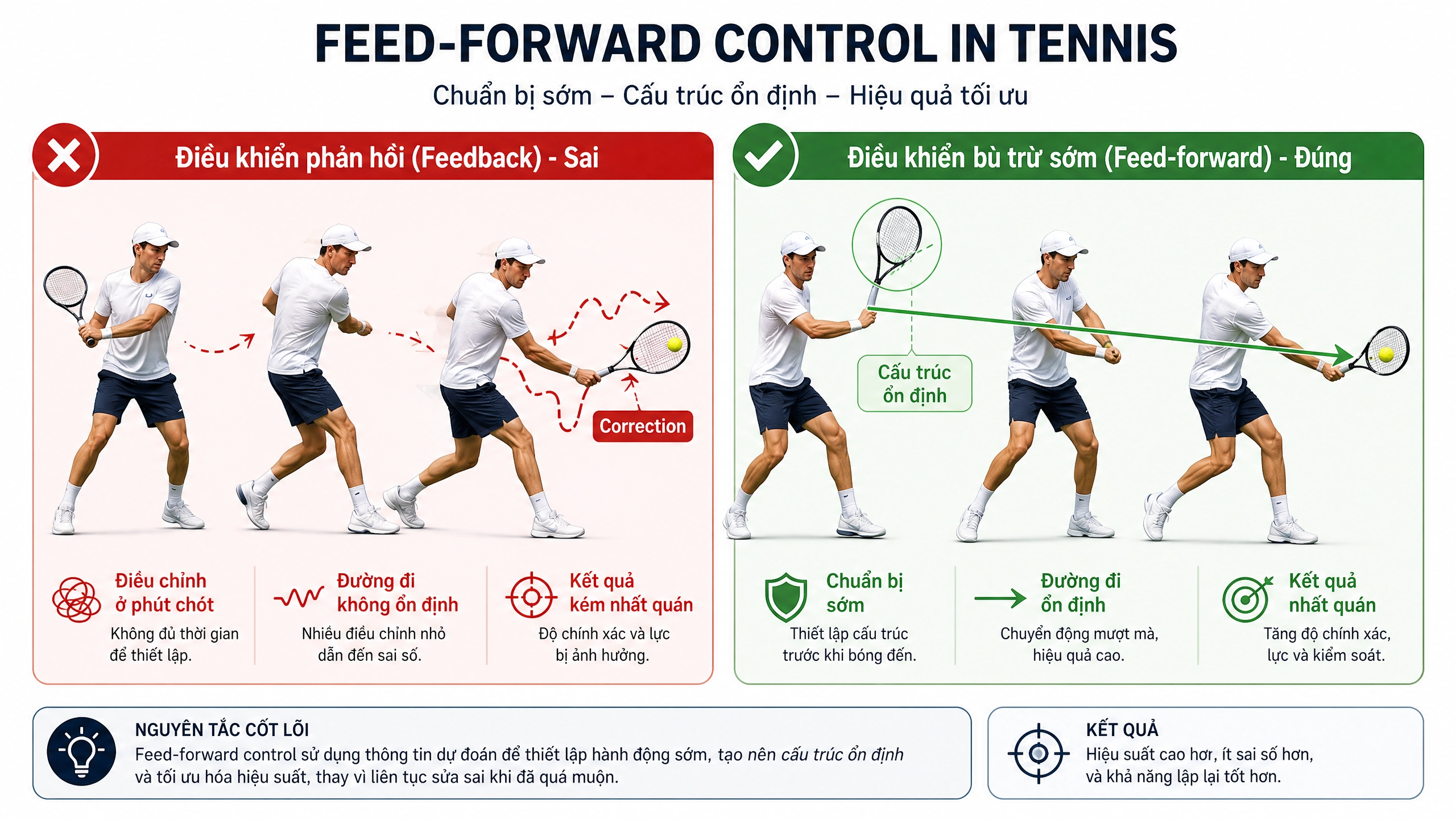
Anticipation > Reaction — Tennis as Blitz-Chess
5 cards · master-coach-direct
Strategy trong tennis không phải 'đánh vào chỗ trống' — nó là đọc đối thủ 2-3 nhịp trước. Sổ tay của bạn (tactics.md, Bài toán về chiến thuật.md) ghi: 'không phải chạy nhanh, mà là timing'.
Hai ảnh dưới đây: neuro-mechanics of anticipation (4-module sensory processing) và 'Future Champion' paradigm shift (big loop vs direct path).
June 2026 — bilingual EN + VI
Source: MD notes + Gemini-generated images
Index of Cards
- Sensory System for Anticipation: 4-Module Processing
- Future Champion: The Paradigm Shift
- Shot disguise tactic (path A vs B from same prep)
- defensive-jumping-spin-direction-change
- Aerial body rotation
EN: Sensory System for Anticipation: 4-Module Processing
VI: Hệ thống giác quan cho Dự đoán: 4 module xử lý
4 modules: Ball Tracking & Sensory Inputs, Brain/CPU, Motor Control, Proprioception Flow. Bilingual VI+EN.
CUE (EN)
"Anticipation = 4 systems working together. Eyes + ears + proprioception + brain → motor output. Train the system, not the stroke."
CUE (VI)
"Dự đoán = 4 hệ thống cùng làm việc. Mắt + tai + proprioception + não → motor. Tập hệ thống, không phải từng cú đánh."
What the diagram is saying
- Module 1 — Ball Tracking & Sensory Inputs: vision, hearing, proprioception, Vestibulo-Ocular Reflex.
- Module 2 — Brain & Central Processing: CNS, thalamus, core as '2nd brain'.
- Module 3 — Motor Control: muscle spindles, spine stability, reflex/automation patterns.
- Module 4 — Proprioception Flow: skeletal body, central coupling [S] vs decoupling [D].
- Vietnamese captions: 'Hệ thống liên giác' (interoceptive system), 'thoi cơ' (muscle spindle), 'Đồng bằng cột sống' (spinal coupling).
Practical Instructions (Hướng Dẫn Thực Hành)
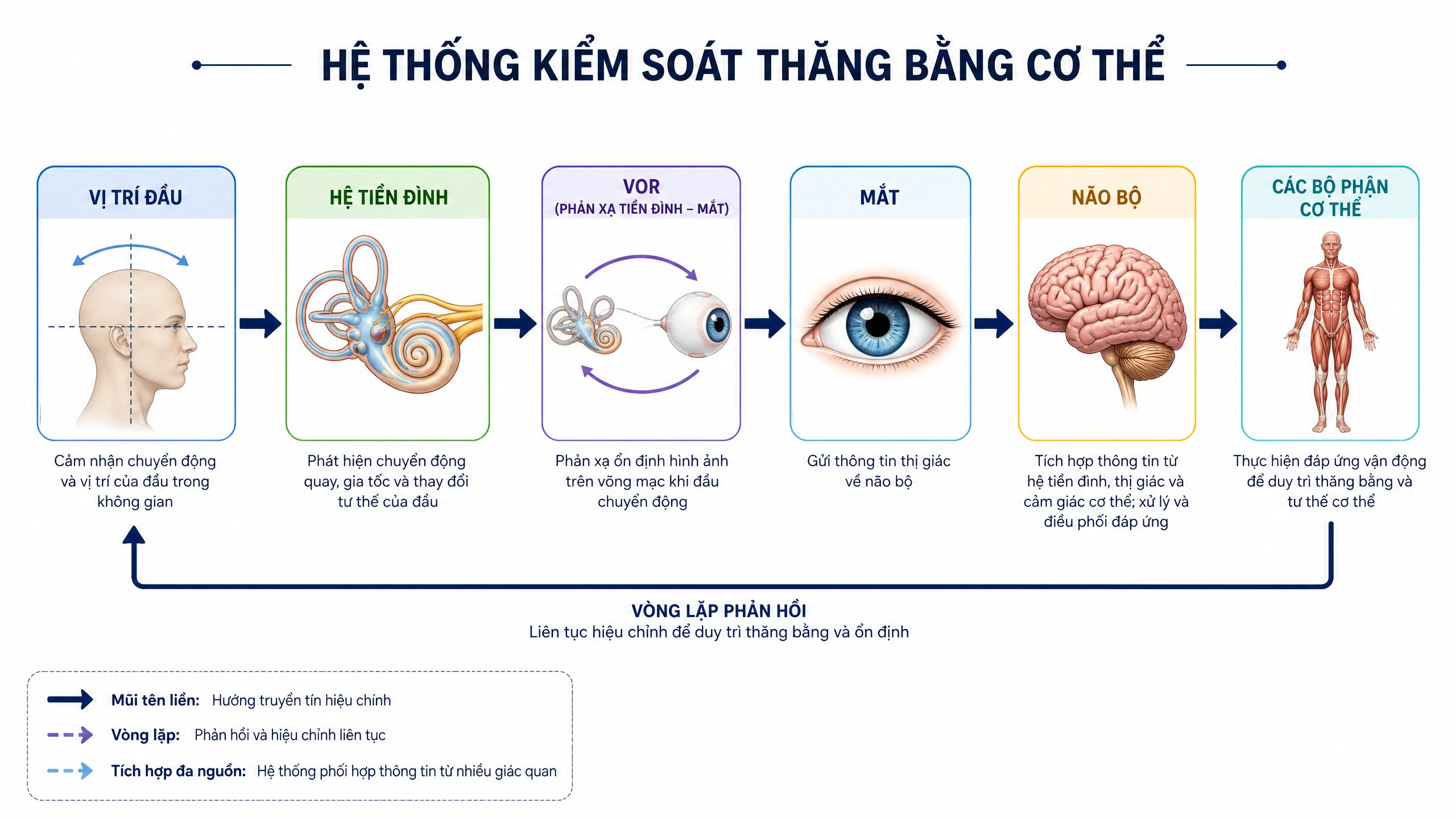
1. Module 1: Visual — read the opponent's body, racket, ball flight from the start.
1. Module 1: Thị giác — đọc cơ thể, vợt, quỹ đạo bóng của đối thủ từ đầu.
2. Module 2: Auditory — listen to the contact sound, the footwork, the breathing pattern.
2. Module 2: Thính giác — nghe tiếng tiếp xúc, bước chân, nhịp thở.
3. Module 3: Proprioceptive — feel your own body's position and balance throughout the rally.
3. Module 3: Cảm giác sâu — cảm nhận vị trí và thăng bằng cơ thể mình suốt rally.
4. Module 4: Cognitive — process the data, predict the next shot, commit early.
4. Module 4: Nhận thức — xử lý dữ liệu, dự đoán cú tiếp theo, commit sớm.
5. Practice all 4 modules actively: shadow rallies, call the next shot before the ball arrives.
5. Tập cả 4 module tích cực: shadow rally, gọi cú tiếp theo trước khi bóng tới.
EN: Future Champion: The Paradigm Shift
VI: Nhà vô địch tương lai: Sự chuyển đổi mô hình
Big loop vs direct path. Old-school (muscle memory) vs modern (neuro-motor pathway control). 4-pillar champion framework.
CUE (EN)
"Big loop ≠ power. Direct path + neuro-motor control = champion. Train the brain, not the muscle memory."
CUE (VI)
"Vòng lớn KHÔNG bằng lực. Đường thẳng + kiểm soát thần kinh-vận động = nhà vô địch. Tập não, không phải trí nhớ cơ."
What the diagram is saying
- Pillar 1 — Traditional Myth vs Modern Reality: large circular loops vs direct racket preparation.
- Pillar 2 — Bio-Slingshot: whip-like kinetic chain, eccentric stretching, super-weapon performance.
- Pillar 3 — Tennis Blitz-Chess: plan moves, anticipate opponent, disguise intentions.
- Pillar 4 — Situational Awareness & Mental Speed: 'ludicrous chess' for high-speed interceptions.
- Side-by-side comparison format with player illustrations.
Practical Instructions (Hướng Dẫn Thực Hành)
1. Old model: muscle memory through repetition. New model: embodied chain through perception.
1. Mô hình cũ: trí nhớ cơ bắp qua lặp lại. Mô hình mới: chuỗi nhập thể qua nhận thức.
2. Old model: technique is the goal. New model: technique emerges from situation.
2. Mô hình cũ: kỹ thuật là mục tiêu. Mô hình mới: kỹ thuật xuất hiện từ tình huống.
3. Champion mindset: every ball is a new problem, not a new repetition of the same stroke.
3. Tư duy nhà vô địch: mỗi bóng là vấn đề mới, không phải lặp lại cùng cú.
4. Train the perception, the stroke follows — read first, then move, then contact.
4. Tập nhận thức, cú đánh sẽ theo — đọc trước, rồi di chuyển, rồi tiếp xúc.
5. The paradigm shift is from doing-the-stroke to reading-and-responding.
5. Sự chuyển đổi mô hình là từ làm-cú-đánh sang đọc-và-đáp-bằng-cú-đánh.
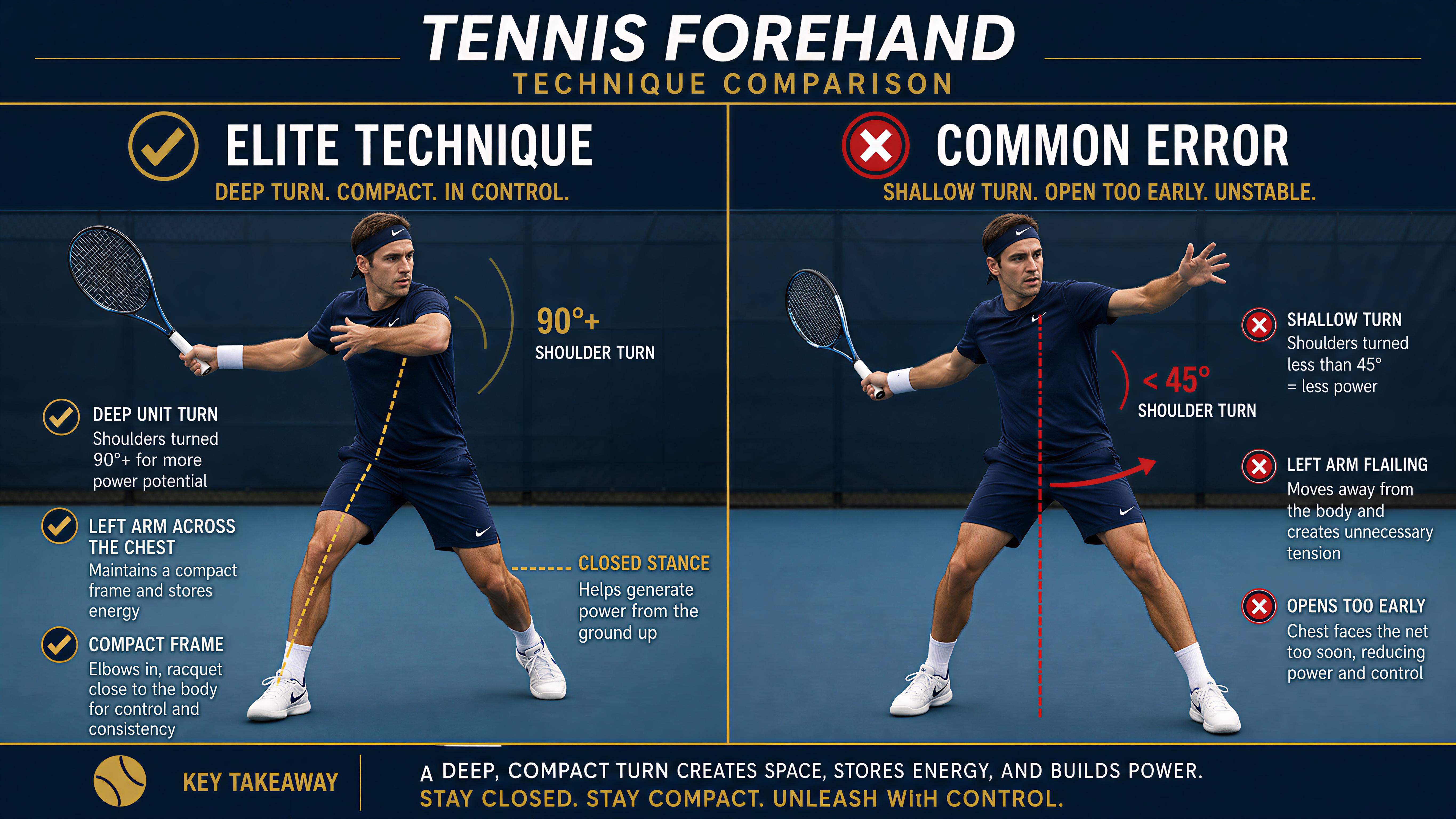
EN: Shot disguise tactic (path A vs B from same prep)
Shot disguise tactic (path A vs B from same prep)
CUE (EN)
1. Same prep, two paths = disguise
2. Path A: cross-court angle (safe, deep)
3. Path B: down-the-line (aggressive, risky)
4. Disguise happens in the takeback, not at contact
5. The ball tells the opponent the truth
6. Racket face is the disguise
7. Use disguise to move opponent out of position
CUE (VI)
1. Cùng chuẩn bị, hai đường = ngụy trang
2. Đường A: chéo góc (an toàn, sâu)
3. Đường B: dọc đường (tấn công, rủi ro)
4. Ngụy trang trong takeback, không tại tiếp xúc
5. Bóng nói sự thật cho đối thủ
6. Mặt vợt là sự ngụy trang
7. Dùng ngụy trang để di chuyển đối thủ ra khỏi vị trí
What the diagram is saying
- Diagrammatic illustration: Shot disguise tactic (path A vs B from same prep)
Practical Instructions (Hướng Dẫn Thực Hành)
1. Same prep, different path — the opponent reads the prep, not the contact.
1. Cùng prep, đường khác — đối thủ đọc prep, không phải tiếp xúc.
2. Two paths from one prep: topspin (path A) or slice (path B) — both are valid.
2. Hai đường từ một prep: topspin (đường A) hoặc slice (đường B) — cả hai đều hợp lệ.
3. Disguise starts at the takeback — the earlier the disguise, the more effective.
3. Che giấu bắt đầu từ takeback — càng sớm, càng hiệu quả.
4. At 4.0+ levels, disguise beats pace — opponents read prep, not speed.
4. Ở trình 4.0+, che giấu thắng tốc độ — đối thủ đọc prep, không phải speed.
5. Practice the disguise: hit 10 balls with the same prep, alternate spin direction.
5. Tập che giấu: đánh 10 bóng cùng prep, luân phiên hướng xoáy.
EN: defensive-jumping-spin-direction-change
defensive-jumping-spin-direction-change
CUE (EN)
1. Defensive jump = reset point
2. Jump in the direction of the shot
3. Spin changes the recovery path
4. Direction change = attacking move
5. Use both to control the rally tempo
6. Defensive = buy time, attacking = win point
7. Master the transition between them
CUE (VI)
1. Nhảy phòng thủ = điểm reset
2. Nhảy theo hướng bóng
3. Xoáy thay đổi đường hồi phục
4. Đổi hướng = nước đi tấn công
5. Dùng cả hai để kiểm soát nhịp rally
6. Phòng thủ = mua thời gian, tấn công = thắng điểm
7. Thành thạo sự chuyển tiếp giữa chúng
What the diagram is saying
- Diagrammatic illustration: defensive-jumping-spin-direction-change
Practical Instructions (Hướng Dẫn Thực Hành)
1. Jump = desperation, not default — use jumps sparingly, only when off-balance.
1. Nhảy = tuyệt vọng, không phải mặc định — dùng nhảy tiết chế, chỉ khi mất thăng bằng.
2. Lob recovery: run + jump + spin — turn the body in the air to land facing the court.
2. Phục hồi lob: chạy + nhảy + xoay — xoay thân trên không để tiếp đất đối diện sân.
3. Tight core mid-air = control — land on the front of the feet, ready to move.
3. Core chặt giữa không trung = kiểm soát — tiếp đất trên mũi chân, sẵn sàng di chuyển.
4. Direction change: hit behind the opponent, then run forward, then change direction.
4. Đổi hướng: đánh sau lưng đối thủ, rồi chạy tới, rồi đổi hướng.
5. Defensive play is buying time — every defensive shot should set up the next offense.
5. Phòng thủ là mua thời gian — mỗi cú phòng thủ nên setup cú tấn công tiếp theo.
EN: Aerial body rotation
Aerial body rotation / direction-change footwork
CUE (EN)
1. Aerial = above the body
2. Direction change footwork = defensive skill
3. Rotate the hips, not just the feet
4. Upper body rotation generates power
5. Lower body generates stability
6. Aerial jump + spin = lob recovery
7. Use aerial spin to change direction mid-air
CUE (VI)
1. Trên không = trên cơ thể
2. Footwork đổi hướng = kỹ năng phòng thủ
3. Xoay hông, không chỉ xoay chân
4. Xoay thân trên tạo lực
5. Thân dưới tạo ổn định
6. Nhảy trên không + xoáy = hồi phục lob
7. Dùng xoáy trên không để đổi hướng giữa không trung
What the diagram is saying
- Diagrammatic illustration: Aerial body rotation / direction-change footwork
Practical Instructions (Hướng Dẫn Thực Hành)
1. Plan the landing before takeoff — know where you will land before you jump.
1. Kế hoạch tiếp đất trước khi cất cánh — biết bạn sẽ tiếp đất ở đâu trước khi nhảy.
2. Tight core mid-air = control — the core is the center of rotation.
2. Core chặt giữa không = kiểm soát — core là tâm xoay.
3. Landing foot = brake foot — land on the front of the feet, knees bent, ready to push.
3. Chân tiếp đất = chân phanh — tiếp đất trên mũi chân, gối gập, sẵn sàng đẩy.
4. Aerial rotation is for emergencies: lobs, defensive gets, wide balls.
4. Xoay trên không cho tình huống khẩn cấp: lob, defensive get, bóng rộng.
5. Use aerial rotation sparingly — the energy cost is high, the recovery time is long.
5. Dùng xoay trên không tiết chế — chi phí năng lượng cao, thời gian hồi phục dài.
3 takeaway cuối
- (1) Anticipation = 4 hệ thống cùng làm việc. Tập hệ thống, không phải từng cú.
- (2) Big loop ≠ power. Đường thẳng + kiểm soát thần kinh-vận động = hiệu quả hơn.
- (3) Tennis là blitz-chess: plan, anticipate, disguise. Đừng chỉ phản ứng — hãy chuẩn bị trước.
Drills tham khảo (20-min practice)
- 5 phút Watch pro match + call shot: xem video 1 quả, dừng ngay trước contact, đoán hướng bóng. So với thực tế.
- 5 phút Plan 3 shots ahead: trước khi giao bóng, nói to 3 quả bạn sẽ đánh tiếp theo. Giao rồi thực hiện.
- 5 phút Disguise drill: shadow forehand nhưng tay chuẩn bị như backhand. Tập không để lộ ý đồ.
- 5 phút Mental replay: 5 phút ngồi yên, nhớ lại 3 cú tốt nhất hôm qua. Cụ thể hóa cảm giác cơ thể.
End of STRATEGY
Henry Pham · Visual Coaching Library · Pilot Series · June 2026